Configure port-forwarding
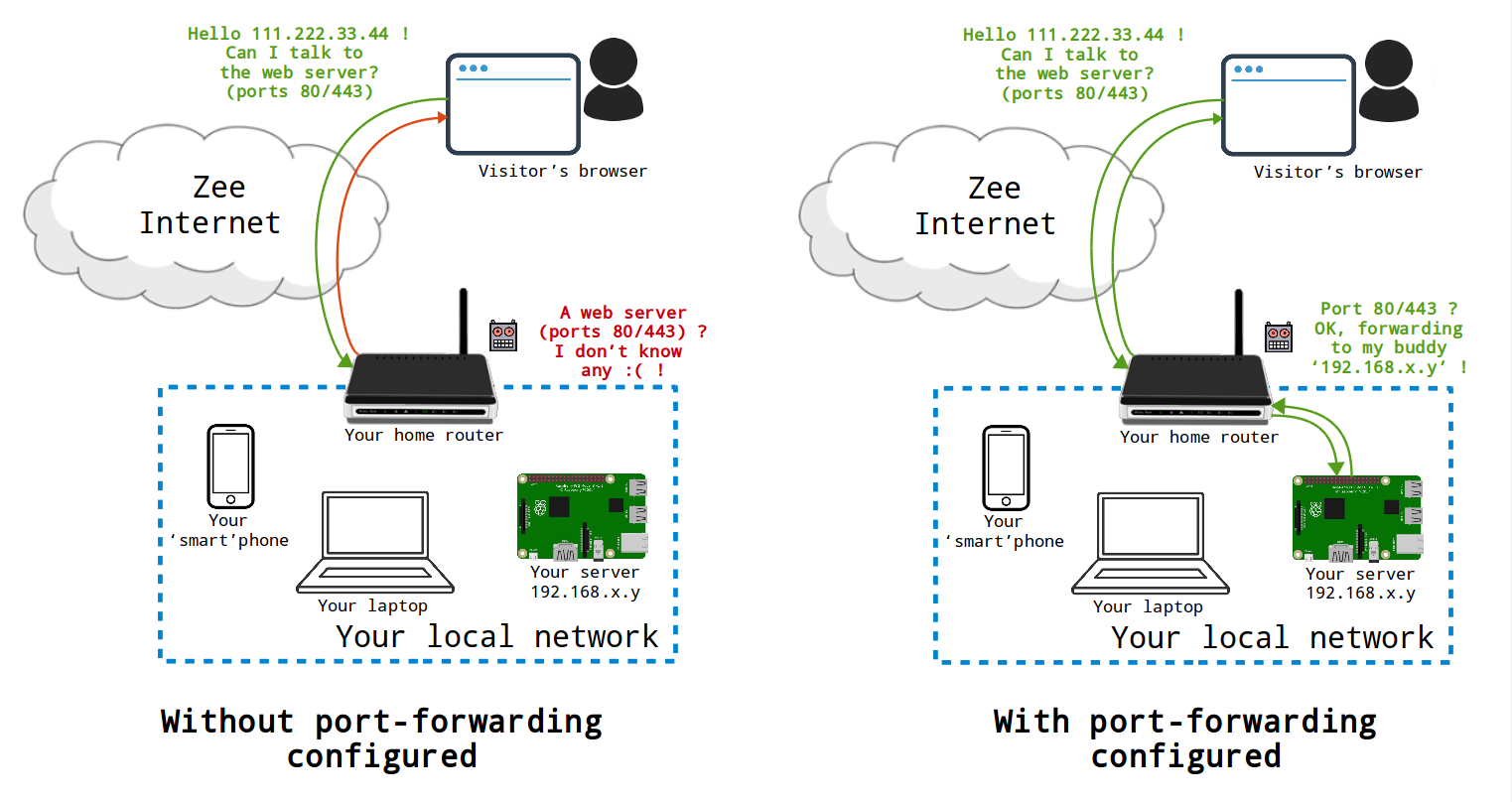
If you are self-hosting at home and without a VPN, you will probably want to forward ports on your home router ("Internet box") if you want your server to be reachable from outside your local network. The sketch below tries to briefly summarize the role and necessity of port forwarding when setting up a server at home.
0. Visualizzare le porte aperte
The diagnosis tool can be used to verify that all necessary ports are exposed to the Internet.
1. Accedere all'interfaccia di configurazione del router
L'interfaccia di amministrazione del vostro router è, quasi sempre, raggiungibile all'indirizzo http://192.168.0.1 o http://192.168.1.1. Da qui dovrete autenticarvi con le credenziali fornite dal provider.
2. Trovare l'IP del server sulla vostra rete locale
Cercate l'IP locale del vostro server così, using one of the method listed on the corresponding page.
Un indirizzo IP locale assomiglia, normalmente, a 192.168.xx.yy oppure 10.0.xx.yy.
L'indirizzo IP locale deve essere necessariamente statico di modo che il reindirizzamento che state configurando nei prossimi passi raggiungerà sempre il vostro server. Per fare ciò dovrete configurare il router in modo che l'indirizzo del vostro server sia definito statico anziché dinamico.
3. Reindirizzamento delle porte
In your router admin interface, look for something like "router configuration" or "port forwarding". The naming differs among the various kinds of router models.
Dovete reindirizzare ognuna delle porte elencate di seguito, verso l'IP locale del vostro server, al fine di permettere il funzionamento dei servizi di YunoHost. Ogni servizio necessita di un reindirizzamento 'TCP'. Alcuni router nominano le porte in 'esterne' e 'interne', si tratta comunque della stessa porta.
Se utilizzate modem e router separati, dovete:
- first on the modem (the box closest to the internet) create rules to forward the above ports to your router;
- then on the router (the box between the modem and your devices) create rules to forward the above ports to the static IP address for your server.
Many internet service providers (ISPs) block outgoing traffic on port 25 by default, to fight spam. Port 25 is however necessary if you want your server to be able to send email. In other extreme cases, some ISPs may not even allow you to use port 80/443 (web) freely... Depending on the ISP, it might be possible to open them in the admin interface... Check this page for more info.